A Little Country a Little Hood Retro Svg
When I pull a new design file into my embroidery software, I am rarely looking for just "pretty." I am looking for viability. As someone who has spent years turning digital files into tangible, sellable goods for small businesses and personal gifts, I know that the difference between a bestseller and a return is often how well the design translates from screen to needle. Today, I am putting A Little Country a Little Hood Retro Svg through its paces. This isn't just about aesthetics; it is about whether this design can hold up in the real world of production, customer expectations, and long-term wear.
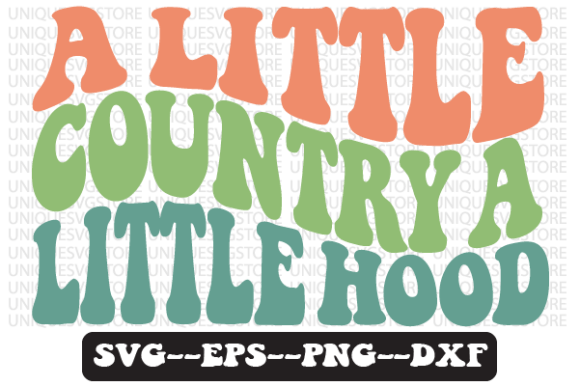
The title alone suggests a specific vibe: a blend of rustic charm and urban edge. The description highlights it as a wavy retro svg design, printable png sublimation design, which tells me immediately that this asset is versatile. It bridges the gap between traditional crafts and modern digital printing methods. But for those of us focused on the tactile experience of embroidery, the question remains: does this design have the structural integrity and visual punch to work as a serious machine embroidery design?
First Impressions and Visual Personality
The first thing that strikes you about A Little Country a Little Hood Retro Svg is the mood. It captures that nostalgic, laid-back energy that has been dominating fashion trends for the last few years. The "wavy" aspect mentioned in the product details suggests fluid lines rather than rigid geometric shapes, which is crucial for embroidery. Straight lines can look stiff on fabric, but waves add movement and softness, making the finished product feel more organic and high-end.
From a designer’s perspective, the layout feels balanced. It doesn’t scream for attention with overly complex detailing that might get lost in the stitching process. Instead, it relies on strong silhouettes and clear typography or graphic elements that read well even from a distance. This is exactly what you want for custom apparel or small shop product branding. When a customer picks up a sweatshirt at a craft fair, they need to understand the message instantly. This design delivers that clarity without clutter.
Real-World Application: Where Does It Fit?
I like to imagine where this design would thrive in a typical maker’s inventory. Let’s say you are preparing for the upcoming holiday season. You have a stack of blank hoodies and t-shirts ready to go. A Little Country a Little Hood Retro Svg fits perfectly here. The retro aesthetic pairs beautifully with heavyweight cotton blends found in quality hoodies. Imagine placing this centered on the chest of a heather grey hoodie, or perhaps left-chest placement on a black t-shirt. The contrast potential is high, allowing for bold thread choices that pop against the fabric.
Beyond apparel, this design has surprising versatility for home decor and accessories. Consider a tote bag design. A canvas tote embroidered with this wavy retro motif looks effortless and chic—perfect for an Etsy seller targeting the boho or minimalist crowd. It also works wonderfully as a personalized gift for parents. Picture a onesie for a newborn or a baby bodysuit featuring this design. The softer curves translate gently on delicate fabrics, creating a keepsake item that parents will cherish. It adds a touch of personality to baby embroidery projects without feeling too childish or too aggressive.
Furthermore, think about embroidered patch applications. If you cut out the design and apply it as a patch on a denim jacket or a baseball cap, the retro theme enhances the vintage look of the garment. It transforms a basic piece of clothing into a statement piece. For craft business owners, this means one design file can serve multiple product lines, increasing your profit margins by reducing the need to create entirely new assets for every new item.
Technical Considerations and Stitching Clarity
However, enthusiasm must be tempered with technical reality. Not all designs stitch out equally well, and A Little Country a Little Hood Retro Svg requires some thoughtful execution. Because it is described as a wavy retro svg, we must consider how those curves will behave during digitizing. If the stitch density is too high, the fabric may pucker, especially on lighter materials like thin cotton tees or linen. Conversely, if the density is too low, the design may look sparse and lack definition.
For the best results, always test the design on scrap fabric first. Pay close attention to the stabilizer choice. For stretchy fabrics like jersey knits used in t-shirts and tank tops, a cut-away stabilizer is usually necessary to prevent distortion. For woven fabrics like canvas totes or aprons, a tear-away or wash-away stabilizer might suffice, depending on the weight of the material. I also recommend checking the hoop size requirements. While many retro designs are compact, ensuring the design fits comfortably within standard hoop dimensions prevents awkward trimming and ensures clean edges.
Another critical factor is thread color selection. The retro theme often calls for muted earth tones, pastels, or vibrant neon accents depending on the specific era being referenced. Test your thread colors against both light and dark fabric backgrounds. A design that looks striking on white might disappear on navy blue unless you choose high-contrast threads. Using black and white mockups during the planning phase can help you visualize how the value contrast will hold up in the final finished product.
Areas Caution Is Required
There are scenarios where this design should be used carefully. Avoid placing intricate parts of the design on highly textured fabrics, such as chunky knits or fleece, unless you are experienced in navigating surface irregularities. The needle may struggle to penetrate consistently, leading to skipped stitches. Similarly, be cautious when embroidering on curved surfaces like caps or bags with gussets. The curvature can distort straight lines, so consider adjusting the digitizing to account for the curve or using a flexible base.
Also, keep in mind the durability of the finish. If the end product is intended for frequent washing, such as kitchen towels or daily-wear sweatshirt embroidery, ensure that the satin stitches are dense enough to withstand friction. Loose threads or weak anchor points can lead to premature wear, which damages your reputation as a maker. Always inspect the design for any tiny details that might be prone to breaking or tangling during the stitching process.
Impact on Brand and Customer Trust
Using a well-executed design like A Little Country a Little Hood Retro Svg directly impacts your brand consistency. Customers associate the quality of the embroidery with the quality of your entire business. A crisp, clean stitch-out signals professionalism and attention to detail. It builds trust and encourages repeat purchases. In the crowded marketplace of Etsy sellers and digital product sellers, standing out is essential. This design offers a unique aesthetic that differentiates your products from generic, mass-produced items.
Moreover, the retro theme has broad appeal. It resonates with millennials and Gen Z consumers who value nostalgia and authenticity. By offering commercial embroidery services or selling handmade goods featuring this design, you tap into a market that appreciates craftsmanship and story-driven products. The design’s versatility allows you to create cohesive collections, from matching family outfits to coordinated nursery decor, enhancing the perceived value of your offerings.
Final Verdict
In conclusion, A Little Country a Little Hood Retro Svg is a strong candidate for any crafter or designer looking to expand their portfolio. Its wavy, retro aesthetic is timely, appealing, and technically adaptable to various mediums. Whether you are creating holiday embroidery gifts, launching a line of custom apparel, or adding decorative touches to home goods, this design provides a solid foundation for success. Just remember to prioritize proper testing, appropriate stabilizers, and careful thread selection to ensure every stitch reflects the high standards your customers expect. With the right execution, this design can become a staple in your creative arsenal, driving engagement and sales for your craft business.