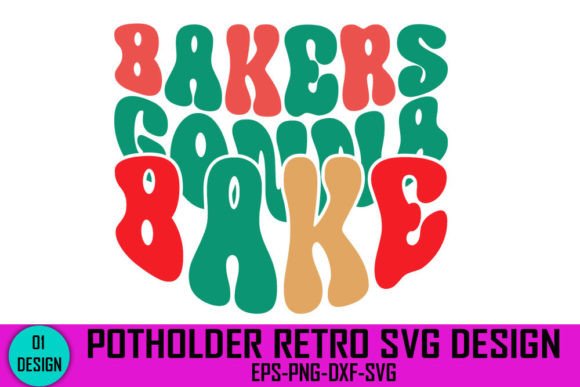
Bakers Gonna Bake Potholder Retro Svg Review
As a designer who spends half my life troubleshooting stitch errors and the other half admiring clean digitization, I approach every new file with a mix of skepticism and hope. When Bakers Gonna Bake - Potholder Retro Svg landed on my desk, I didn’t just see a cute graphic; I saw potential inventory for a boutique kitchen line or a high-engagement listing for an Etsy shop. The title suggests nostalgia, but in embroidery, nostalgia only works if the execution holds up under tension. After evaluating this design through the lens of practical application, I want to share how it translates from a digital asset into a tangible, sellable product.
First Impressions: Mood and Visual Personality
The immediate appeal of Bakers Gonna Bake - Potholder Retro Svg lies in its thematic clarity. It taps into the "cottagecore" and home-baking aesthetic that remains incredibly strong in the handmade market. The retro vibe suggests warm tones, perhaps slightly distressed textures or classic typography, which creates an instant emotional connection with customers who value comfort and tradition. Unlike generic clipart, a well-executed retro design feels curated. It tells a story before the customer even touches the fabric.
From a layout perspective, the potholder shape is inherently forgiving. It offers a contained canvas that doesn’t require complex placement planning. For a small business owner, this means faster production times. You aren’t fighting to align a sprawling landscape design on a curved surface; you are working within a defined boundary that naturally draws the eye to the center. This makes it an ideal candidate for custom apparel accents, kitchen towels, or standalone decorative patches.
Real-World Application: Where This Design Shines
I recently visualized this design being used for a set of personalized wedding gifts. Imagine a groom’s party receiving matching aprons or a bride gifting her mother a set of embroidered tea towels. The phrase "Bakers Gonna Bake" is humorous yet heartfelt, striking the perfect balance for a gift that acknowledges a hobby without being overly sentimental. In these scenarios, the design functions as more than decoration; it becomes part of the recipient’s identity.
For Etsy sellers and crafter entrepreneurs, this file is particularly versatile. It can be adapted across multiple product categories:
- Kitchen Textiles: Embroidered on cotton tea towels, linen napkins, or heavy-duty aprons. The retro style pairs beautifully with natural fibers.
- Home Decor: As a focal point on a pillow cover or a wall hanging, adding a touch of whimsy to a modern farmhouse kitchen.
- Apparel Accents: While less common on full shirts, it works wonderfully as a chest pocket detail on a chef’s coat or a sweatshirt, especially when paired with simple stitching.
- Digital Products: If you sell printable mockups or design assets, this image serves as a strong preview to attract buyers looking for niche baking themes.
The versatility extends to holiday embroidery as well. Baking is central to Christmas, Thanksgiving, and Easter. Having a design that fits these seasonal narratives allows you to rotate your inventory efficiently without needing entirely new creative concepts for every major holiday.
Technical Considerations and Stitching Reality
However, a pretty picture does not always equal a good machine embroidery design. Before committing to a production run, you must consider the technical translation. The term "Retro" often implies intricate details or thin lines. In digitizing, thin lines can become messy if the stitch density is too low, resulting in thread breaks or poor definition. Conversely, if the density is too high, the fabric may pucker, ruining the professional look of the finished piece.
When evaluating Bakers Gonna Bake - Potholder Retro Svg, pay close attention to the text. Is the lettering bold enough to remain legible after stitching? Small, delicate fonts often get lost in the texture of woven fabrics like linen or terry cloth. If the design relies on tiny serifs or thin curves, test it on scrap fabric first. Look for any areas where the satin stitch might bridge gaps poorly or where fill stitch patterns might clash with the background texture.
Another critical factor is the choice of thread colors. A retro design typically uses muted or pastel palettes. On dark fabrics, these colors may lack contrast, making the design appear muddy or invisible. I recommend testing this design on both light and dark backgrounds. If the contrast is insufficient, consider using a backing stabilizer that adds opacity or choosing a lighter base fabric. Also, inspect the running stitch elements closely; they should lay flat and smooth, not bunching up along the edges of the potholder shape.
Strategic Use Cases and Cautionary Notes
While this design is robust for many applications, there are places where it requires careful handling. Avoid using it on highly textured fabrics such as waffle weave or thick fleece unless you have adjusted the digitization specifically for those materials. The needle penetration can be inconsistent, leading to skipped stitches. Similarly, on stretchy knits, ensure you are using a sufficient amount of stabilizer to prevent distortion. The weight of the embroidery thread can pull the fabric out of shape if the support isn’t adequate.
Be cautious with small hoop sizes. If the design includes detailed corners or intricate borders, shrinking it down too much will compromise its integrity. The charm of a retro design often lies in its specific stylistic choices—distressed edges, specific font weights—which can be lost if scaled below a certain threshold. Always confirm the minimum recommended hoop size before attempting to place it on smaller items like baby clothes or caps.
Furthermore, consider the end-user experience. A potholder or apron is a functional item. It will be washed frequently. Ensure that the design is anchored securely so that it doesn’t unravel after several cycles. This durability directly impacts customer trust and reduces returns for your craft business.
Practical Designer Notes for Success
To get the best results from Bakers Gonna Bake - Potholder Retro Svg, follow these steps:
- Test on Scrap: Never go straight to the final product. Stitch it on the same fabric type you plan to use.
- Check Contrast: Hold the design up against your chosen fabric. Does it pop? If not, adjust your color palette.
- Review Density: Zoom in on the digital file. Are there overlapping stitches that might cause bulk?
- Verify Licensing: Since this is a digital embroidery file sold under Crafts and Graphics categories, double-check the commercial license terms. Can you sell unlimited finished products? Or is there a cap? Clarity here protects your small shop product revenue stream.
- Use Proper Stabilizer: Match your stabilizer to your fabric weight. Heavy cut-away for knits, tear-away for wovens.
Final Verdict
Bakers Gonna Bake - Potholder Retro Svg is a solid addition to any designer’s library, particularly for those focused on home goods and personalized gifts. Its strength lies in its broad appeal and ease of integration into existing product lines. It doesn’t require exotic techniques or expensive materials to shine. However, like all embroidery project assets, its success depends on your preparation. By respecting the technical limits of digitization and choosing the right fabrics, you can transform this simple SVG into a high-quality, desirable handmade product that resonates with customers. It’s not just a file; it’s a blueprint for a charming, functional piece of art that brings warmth to the kitchen.