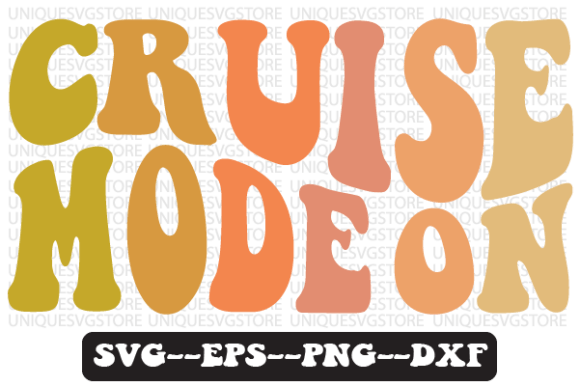
Cruise Mode on Wavy Retro Svg Design
As a designer who spends half the day staring at stitch paths and the other half worrying about whether a client’s vision will actually survive a wash cycle, I don’t just look at a design file—I look at its potential. When Cruise Mode on Wavy Retro Svg Design landed in my inbox, my first instinct wasn’t to admire the aesthetic; it was to ask: “Can I embroider this?” The world is flooded with sublimation-ready graphics that look stunning on a mug but fall apart when converted to thread. This particular asset, categorized under Crafts and Graphics, walks a fine line between printable art and functional embroidery, making it a fascinating candidate for real-world application.
The First Impression: Mood and Layout
The name alone sets a specific tone. “Cruise Mode” suggests relaxation, nostalgia, and a slow-living aesthetic. Paired with the “Wavy Retro” descriptor, we are looking at a design that likely leans into 70s or early 80s vibes—soft curves, perhaps some pastel or muted earth tones, and a layout that feels breezy rather than rigid. From a visual personality standpoint, this isn’t a corporate logo or a high-contrast streetwear graphic. It’s designed for comfort. It feels like something you’d see on a boutique tote bag hanging in a coastal gift shop or embroidered on the pocket of a well-worn denim jacket.
What stands out immediately is the flow. The wavy elements suggest movement, which translates beautifully to embroidery if handled correctly. Unlike sharp geometric shapes that can look jagged if the resolution is low, organic waves tend to forgive minor stitching imperfections. They allow the eye to travel across the design without getting snagged on hard edges. For an Etsy seller or small business owner, this kind of visual fluidity is gold because it appeals to customers looking for handmade warmth rather than industrial precision.
Real-Life Application: Where Does This Fit?
I recently had a project request for a series of personalized baby gifts for a friend’s nursery shower. The brief was simple: soft, nostalgic, and gender-neutral. As I mentally mapped out Cruise Mode on Wavy Retro Svg Design, I realized it fits perfectly into the category of baby embroidery. Imagine this design stitched onto a onesie or a muslin blanket. The retro wave motif provides a gentle background texture that doesn’t overwhelm the delicate nature of baby items. It adds character without being loud.
Beyond baby gear, this design screams sweatshirt embroidery. Think of a cropped, vintage-style hoodie in heather grey or cream. Placing a medium-sized version of this design on the chest or back creates an instant statement piece. It works equally well as a tote bag design for craft fairs, where the casual vibe matches the eco-friendly ethos of shoppers carrying reusable bags. It’s also a strong contender for kitchen towel designs, adding a touch of retro charm to a modern farmhouse kitchen.
However, the versatility extends to commercial embroidery opportunities as well. Boutique branding often relies on subtle, recognizable motifs. If you are creating a line of home goods, this design could serve as a signature element on pillow covers or aprons. The key here is context. This isn’t a design for a high-performance athletic jersey; it’s for lifestyle products. It enhances the perceived value of a handmade product by adding a layer of artistic intent that mass-produced items lack.
Technical Considerations and Stitch Behavior
Here is where the rubber meets the road. Just because a file is labeled as a design asset doesn’t mean it’s ready for the hoop. When evaluating Cruise Mode on Wavy Retro Svg Design for actual stitching, several factors come into play. The wavy lines likely require a combination of satin stitches for definition and fill stitches for body. If the waves are too thin, they may break during trimming. If they are too dense, the fabric might pucker.
I always advise testing on scrap fabric first. Specifically, check how the design behaves on stretchy fabrics like jersey knits used for t-shirts. Without proper stabilizer, those waves can distort, losing their retro charm and looking more like accidental ripples. For woven fabrics like cotton canvas or linen, the design should hold its shape beautifully. The contrast between the thread colors and the fabric texture is crucial. On dark fabrics, you’ll need lighter threads or a contrasting applique base to ensure the wavy details pop. On light fabrics, darker threads provide a crisp, clean look.
Another critical point is the hoop size. This design likely requires a medium to large hoop to accommodate its width. If you’re working with a smaller machine, you may need to split the design, which can leave visible seams. Always confirm the exact dimensions before committing to a final product. Also, inspect the small details. Are there tiny text elements or intricate curves? These are prone to tangling if the stitch density is too high. A lower density often looks cleaner on retro styles, allowing the negative space to breathe.
Where to Use With Caution
While this design has broad appeal, there are scenarios where it might struggle. Avoid using it on highly textured fabrics like heavy tweed or boucle, as the embroidery will get lost in the weave. Thin fabrics like silk or lightweight rayon require extra care; the weight of the thread can cause distortion unless you use a tear-away stabilizer effectively. Curved surfaces, such as caps or hats, present another challenge. The waves must follow the curvature smoothly, or they will look misaligned. Additionally, be cautious with very small applications. If scaled down too much, the retro wavy details may merge into a blurry blob, losing the distinct personality that makes the design attractive.
Visual Appeal and Customer Trust
In the digital age, presentation matters. Before even cutting fabric, I test designs in black and white mockups. This strips away color bias and helps me evaluate the balance and composition of Cruise Mode on Wavy Retro Svg Design. Does it feel balanced? Is there enough visual weight? In this case, the answer is yes. The organic shapes create a harmonious flow that feels professional and intentional.
This professionalism translates directly to customer trust. When a buyer sees a neatly executed embroidery on a sweatshirt or tote bag, they perceive higher quality. A messy stitch job, regardless of how cute the design is, can undermine the brand. By taking the time to optimize this design—checking thread colors, ensuring proper underlay, and selecting the right stabilizer—you signal to your customers that you care about the details. This attention to detail is what turns a one-time buyer into a loyal fan.
Final Thoughts for Makers and Sellers
Cruise Mode on Wavy Retro Svg Design is more than just a pretty picture; it’s a versatile tool for creative entrepreneurs. Whether you are an Etsy seller looking to expand your home decor section, a hobbyist wanting to make a unique personalized gift, or a small shop owner building a cohesive brand identity, this design offers a solid foundation. Its retro vibe taps into current trends while remaining timeless enough to sell year-round.
Remember to verify the licensing terms before selling finished items. Ensure you have the right to use the design commercially. Test it thoroughly on various fabrics and hoop sizes. Pay attention to the interplay between the wavy lines and the thread texture. When done right, this design can elevate a simple garment or accessory into a standout piece. It’s practical, stylish, and ripe for creativity. So, load up your machine, pick your threads, and let the cruise mode begin.